Riding Simulator
Explore how to rebuild lost horse riding confidence after a fall, treating it like an injury. Discover effective strategies and the role of horse riding simulators in recovery.
Sometimes the part that needs time to recover isn’t the part that hit the ground.
You fell. Or your horse bolted, spooked, bucked or reared. Maybe you had a close call that nobody else even thought was particularly dramatic. Whatever happened, it scared you.
Perhaps you were injured and spent weeks or months physically recovering. Or perhaps you walked away with little more than a bruise and a good story. Either way, eventually you were physically okay—but something had changed.
The next time you got on, your body felt different. You held your breath. Your legs gripped. Your shoulders tightened. A movement you wouldn’t have thought twice about before suddenly made your heart race. Maybe canter became the thing you dreaded, or you were fine in the arena but couldn’t bring yourself to ride out on the trail. Maybe you simply stopped trusting the feeling underneath you.
Your body healed. But riding still didn’t feel the same.
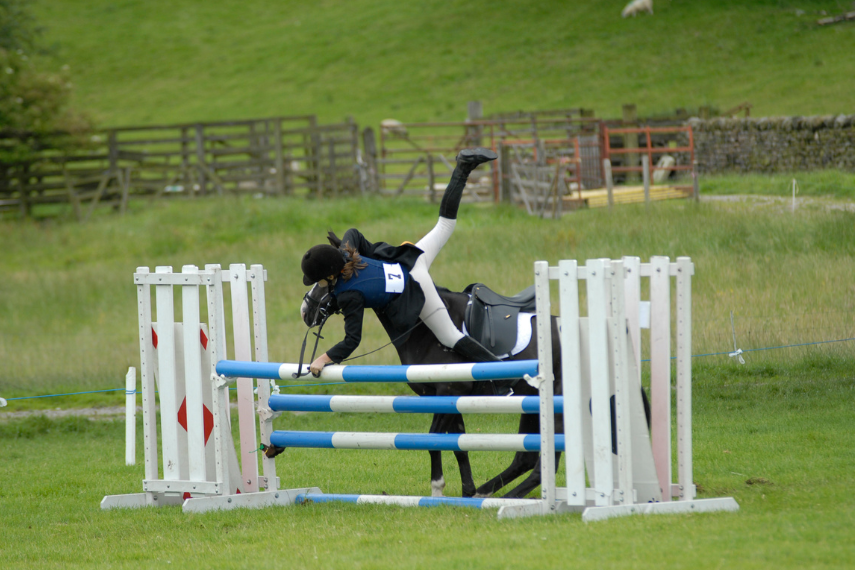
“Get right back on before you lose your nerve.”
Most riders have heard some version of this advice, and there can be wisdom behind it. A minor tumble doesn’t necessarily need to become something bigger, and avoiding something that frightens us can sometimes make returning to it feel even more difficult.
But somewhere along the way, “get back on” also became part of riding culture: be brave, shake it off, don’t think about it too much. Perhaps we haven’t always left enough room for another possibility—that a genuinely frightening experience may need some recovery, too.
If a rider badly injured an ankle in a fall, we wouldn’t expect her to pretend it didn’t hurt. We wouldn’t call her weak because she needed to rebuild strength before jumping again. We would expect recovery to happen in stages.
What if we extended some of that same patience to a rider whose sense of safety has been shaken?
When your brain says “I’m fine” but your body says otherwise
This is one of the frustrating things about lost riding confidence. You may know perfectly well that you’re safe. You may trust your horse. Your coach may tell you everything looks fine. You may have ridden successfully hundreds—or thousands—of times before. And yet your body reacts.
Your heart beats faster, your breathing changes and your muscles brace. You may grip with your legs or hands or become hyper-aware of every movement your horse makes. Those reactions aren’t necessarily a conscious choice. After a frightening experience, our nervous system can become more alert to things it associates with danger, so a sensation, movement or situation connected with what happened before may trigger a protective response—even when we consciously know that this ride is different.
For riders, there is another complication: our horses feel us. A rider who is bracing, gripping or holding her breath may move differently in the saddle. The horse may respond to that change, which can make the rider feel even less secure. Suddenly horse and rider can find themselves in a conversation neither intended to start.
There’s a lot of space between “push through it” and “don’t do it”
Rebuilding confidence doesn’t necessarily mean avoiding riding until every trace of nervousness disappears. But it doesn’t have to mean forcing yourself through fear, either.
We can make the challenge smaller. We can practise the pieces that feel difficult in an environment that feels manageable. We can give a rider opportunities to experience a movement or sensation that worries her without simultaneously experiencing the outcome she fears.
For some riders, that might mean working with a trusted coach or a steady horse. It could mean returning at the walk before asking for more, doing groundwork first, or gradually reintroducing a particular movement or situation.
Increasingly, there is another tool we can add to that list: the riding simulator.
Where a riding simulator can help
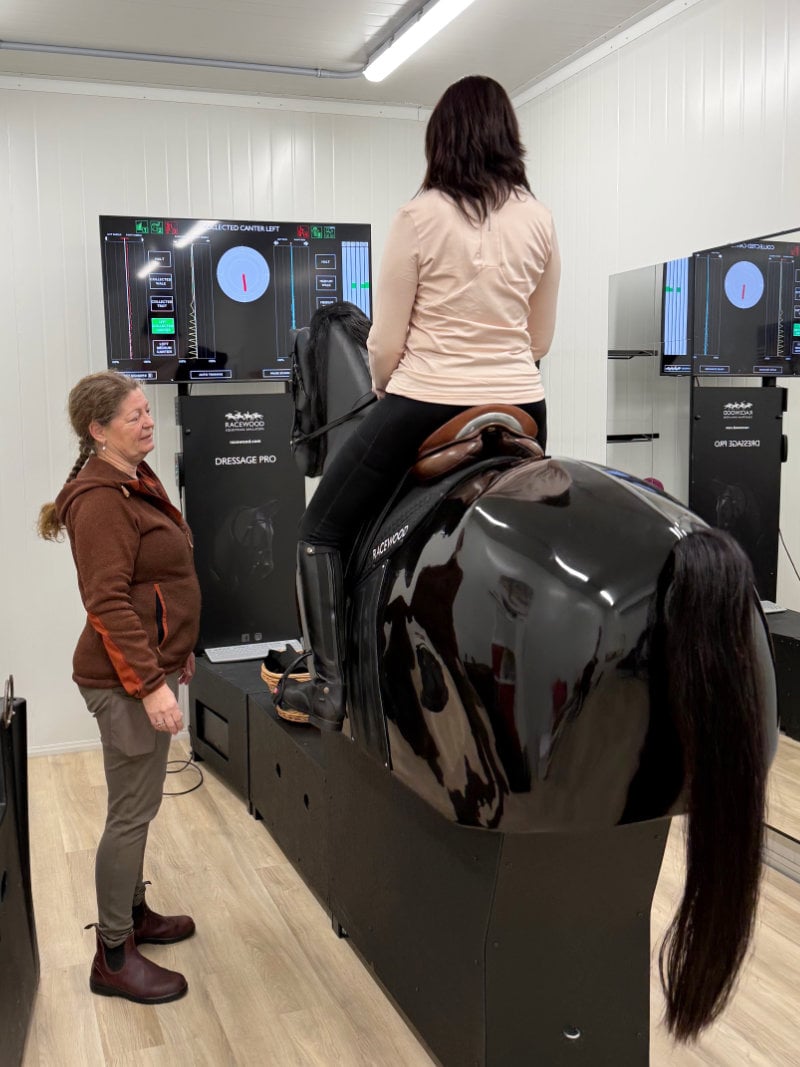
One of the things we’ve come to appreciate about Will-oh!, our Racewood Dressage Pro riding simulator, is that her value isn’t only in improving riding technique. For someone rebuilding confidence, one of her greatest advantages is much simpler:
She is predictable.
She isn’t going to spook at something outside the arena, bolt or become tense because you became tense. She doesn’t mind if you need to stop, take a breath and start again, and she certainly doesn’t care if you need to repeat the same thing ten times.
Removing the unpredictability of a live horse can create space to concentrate on being a rider again. You can walk, stop and breathe. You can trot for ten seconds and decide that was enough. You can notice that you’re gripping and experiment with letting your leg soften. If canter has become frightening, you can experience that movement again in a controlled environment without simultaneously worrying about what the horse underneath you might do.
And when you’re ready, you can do it again.
The goal isn’t to convince ourselves that riding has no risk. Horses are living, thinking animals, and their unpredictability is part of both the challenge and the joy of riding them. Nor can a simulator reproduce everything involved in riding a real horse.
Instead, think of it as a bridge between “I’m not ready for that yet” and “I think I’d like to try again.”
Confidence doesn’t have to come back all at once
Losing confidence after a frightening experience doesn’t erase everything you knew before it happened. You are still the rider who learned those skills. But your path back may look different from someone else’s—and perhaps different from the rider you were before.
For one person, getting straight back on after a fall may be exactly the right thing. For another, the better route may be slower. Neither needs to become a test of toughness.
Confidence isn’t always something we regain by demanding more courage from ourselves. Sometimes we rebuild it through small, successful experiences that remind the body what safe can feel like: a relaxed walk, a few strides of trot, a canter transition that didn’t produce the reaction you feared, or simply noticing that this time you weren’t holding your breath.
Those moments can begin to add up.
There’s another way back
At Willow & Withers, we see Will-oh! as one tool within that process. She isn’t a replacement for your horse or for good coaching, and a riding simulator isn’t treatment for trauma or a mental-health condition.
What it can offer riders who have had a frightening experience, lost confidence, taken time away from riding or simply want somewhere controlled to work through a particular challenge is something unusual: a chance to practise being a rider without having to manage the unpredictable part at the same time.
Gradually. Safely. At your pace.
Because sometimes the part that needs time to recover isn’t the part that hit the ground.